 VitaroUNO INDUSTRIAL
Material & aging guide
Does UV Exposure Damage Plastic Pedestals? UV Resistance & Aging Guide
Outdoor pedestals live their whole life in the sun, so "will UV destroy them?" is a fair question. The honest answer: untreated plastic breaks down in UV, but a properly stabilized and tested compound does not fail in normal service. The difference is in the material and the test report, not in the word "resistant" on a brochure. This guide explains what UV does to reinforced PP and recycled plastic pedestals, how aging is actually tested, and what to ask for — without the marketing fluff. For the bigger picture, see how to choose the right pedestal.
1. What UV does to polypropylene
Polypropylene (PP) is a great pedestal material — stiff, light, chemical-resistant — but in its base form it is vulnerable to UV degradation. Sunlight's UV photons cause chain scission: the polymer chains shorten, the plastic becomes brittle, color fades, and over years the mechanical strength drops. Left untreated, an outdoor PP part will eventually craze and lose load capacity.
The fix is formulation, not magic: quality outdoor pedestals are made from UV-stabilized PP — compounds with UV absorbers and HALS (hindered amine light stabilizers) that intercept the degradation cycle. A well-stabilized compound keeps its properties across years of normal outdoor exposure. So the real question is never "does UV affect plastic" (it does) but "how well is this specific compound stabilized and tested?"
"UV resistant" with no test behind it is a label, not a specification. Ask for the weathering report.
2. What Vitaro pedestals are made of
Vitaro pedestals are polypropylene-based:
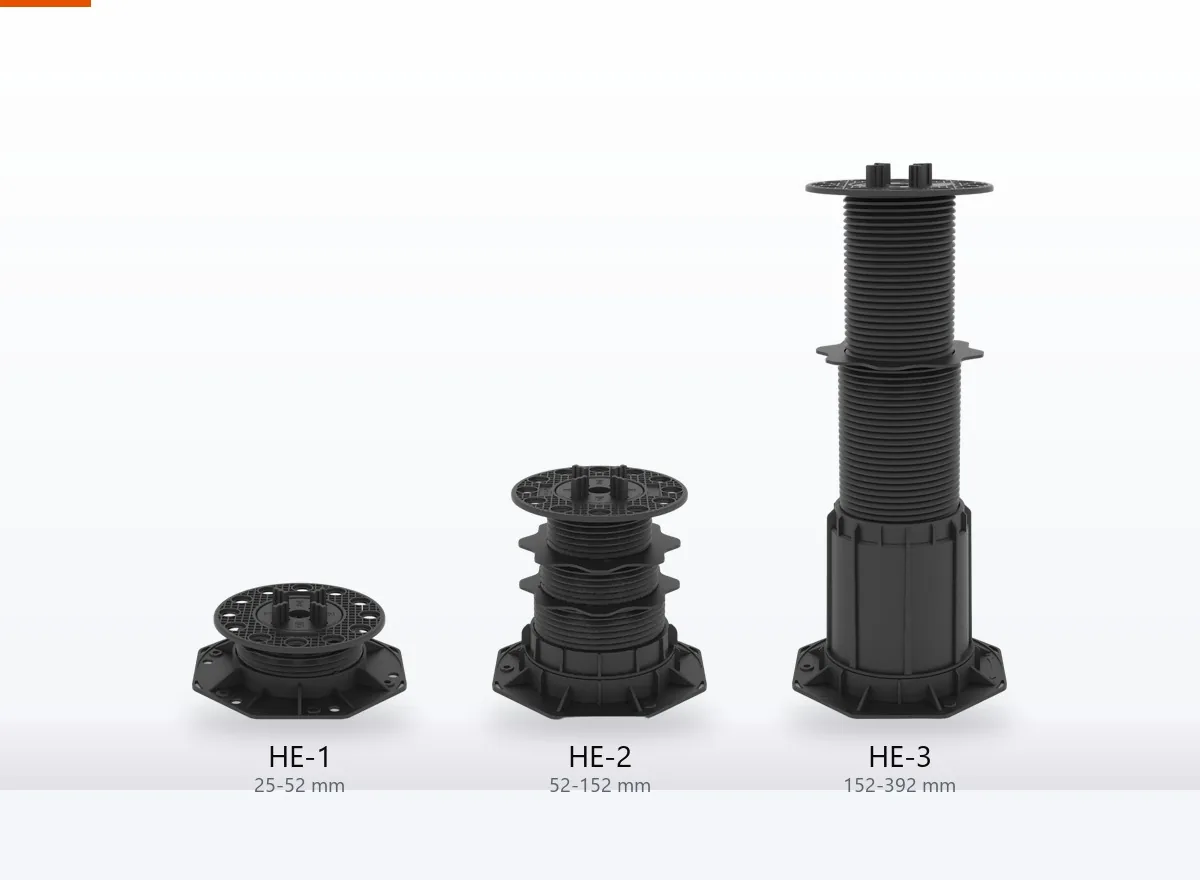
- HE Series — reinforced polypropylene: PP with glass fibre (PP+GF) for added stiffness at the tallest builds (up to 392 mm).
- B Series and F Series — UV-stabilized PP, tuned for their height and load roles.
- Recycled content — recycled PP is used where applicable; the exact recycled-content ratio is available on request for your project's sustainability file.
Reinforcement and stabilization are what let a plastic pedestal carry real load outdoors for years. The material choice is the first line of defense; testing confirms it.
3. How aging / UV resistance is tested
You cannot see UV damage in a showroom, so it is assessed by accelerated weathering. Common methods:
| Test | Standard | What it shows |
|---|---|---|
| Xenon-arc weathering | ISO 4892-2 / ASTM G155 | Simulates full-spectrum sunlight; measures color change and retained strength |
| Fluorescent UV (QUV) | ASTM G154 | Condensation + UV cycles; screens UV and moisture resistance |
| Before/after mechanical test | Per material spec | Confirms load capacity is retained after aging |
What to ask the supplier: the test method, duration, and the retained-property result — not just a "passed" stamp. A credible report shows the pedestal kept its strength and color after the equivalent of years of exposure.
4. Temperature range
Polypropylene performs across typical outdoor climate ranges, but the exact operating temperature range depends on the compound and any reinforcement. Vitaro states the working temperature range in the product data sheet. For projects in extreme hot (desert, tropical rooftops) or cold (alpine, northern) regions, request the data sheet so the material is matched to the site — don't assume one grade fits every climate.
We do not publish a single universal temperature number because the safe range varies by series and grade; the data sheet for your specific order is the source of truth.
5. Recycled plastic pedestals
Recycled plastic pedestals are increasingly specified for sustainability, but performance must be verified, not assumed. With controlled feedstock and proper stabilization and reinforcement, recycled PP can perform close to virgin PP. The proof is in the reports:
- Ask for the load and weathering test reports on the actual recycled-content grade you will receive.
- Ask for the recycled-content ratio so it can go into your project's environmental file.
- Vitaro provides documentation on the specific material batch for your order.
6. Choosing for hot / sunny climates
For tropical or high-UV regions (Southeast Asia, the Gulf, Australia):
- Specify UV-stabilized, reinforced PP.
- Confirm the weathering test result and retained strength.
- Match the temperature range to the site.
- Favor good drainage and consider lighter colors to reduce surface heat.
Related guides
Loads: Load capacity · Load tests: What load test to ask for · Choose: How to choose the right pedestal · Vs fixed: Adjustable vs fixed support.
Product specs: Deck pedestals · Paver pedestals · Roof pedestals · Heavy-duty pedestals.
Frequently asked questions
Does UV exposure damage plastic pedestals?
Untreated polypropylene degrades in sunlight — UV causes chain scission that makes the plastic brittle, fades color and eventually reduces strength. Quality outdoor pedestals use UV-stabilized compounds so the material resists aging in normal outdoor service. Always ask for the supplier's weathering/aging test report rather than trusting a 'UV resistant' label.
What are Vitaro pedestals made of?
Vitaro pedestals are polypropylene (PP). The HE Series is reinforced polypropylene — PP with glass fibre (PP+GF) — for added stiffness at taller heights; the B and F Series use UV-stabilized PP. Where applicable, recycled PP content is used; ask for the current recycled-content ratio for your sustainability documentation.
How is UV / aging resistance tested?
Aging is assessed by accelerated weathering: xenon-arc per ISO 4892-2 / ASTM G155, or fluorescent UV (QUV) per ASTM G154, often paired with mechanical testing before and after to measure retained strength and color change. Ask for the test method, duration, and the retained-property result.
What temperature range can plastic pedestals handle?
Polypropylene performs across typical outdoor climate ranges, but the exact operating temperature range depends on the compound and reinforcement. Vitaro specifies it in the product data sheet; request it for extreme hot or cold regions so the material is matched to the site.
Are recycled plastic pedestals weaker?
Recycled PP can perform close to virgin PP when feedstock is controlled and the compound is properly stabilized and reinforced — but it must be verified, not assumed. Ask for the load and weathering test reports on the actual recycled-content grade you will receive; Vitaro provides documentation on the specific batch for your order.
How should I choose pedestals for a hot / sunny climate?
For tropical or high-UV regions, specify UV-stabilized, reinforced PP, confirm the weathering test result and retained strength, and match the temperature range to the site. Vitaro can advise on material and provide the test basis for hot-climate projects — contact us with your location.