 VitaroUNO INDUSTRIAL
Technical guide
Adjustable Pedestal Load Capacity: Specs & How to Calculate
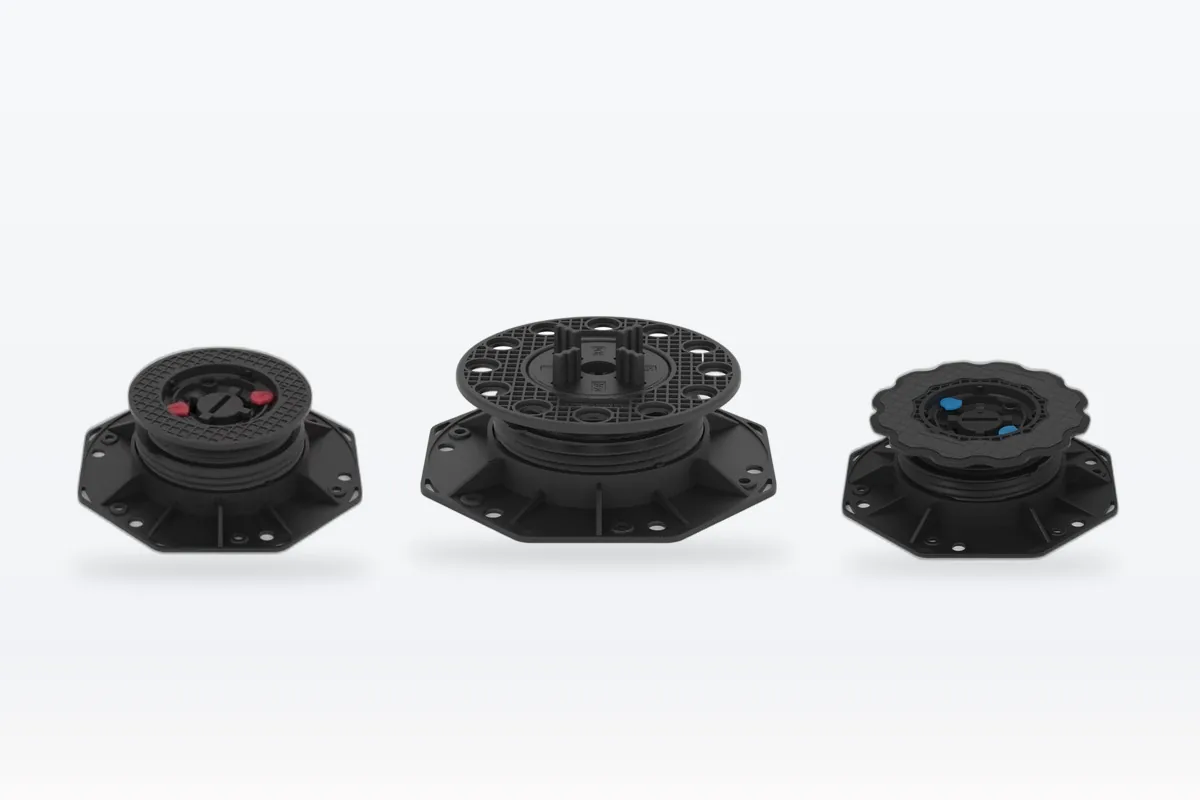
Before you specify a raised deck, rooftop terrace or paved podium, one number decides everything: the adjustable pedestal load capacity. It is the maximum vertical load a single pedestal can carry — and it sets how many pedestals you need, how far apart they go, and which series fits your build. This guide gives the Vitaro ratings, explains why capacity drops as the pedestal gets taller, and shows a simple way to calculate the count and spacing for your project. If you are still choosing a system, start with how to choose the right pedestal.
1. What "load capacity" means for a pedestal
The pedestal load capacity is the maximum vertical (downward) load a single pedestal is certified to carry, measured at its shortest working height. It is not the load of the whole terrace — it is per support. The finished floor's safety comes from the number of pedestals sharing the weight: a 20 m² deck on a 500 mm grid may sit on 80+ pedestals, so the system capacity is the per-pedestal rating multiplied across all of them.
Load capacity is separate from height range. A series can be tall and strong, but the strongest rating is always quoted at the lowest height — see below.
2. Vitaro load capacity by series
All three Vitaro series are polypropylene (HE adds glass fibre) with a 140 mm head and are SGS-tested. Ratings below are the certified working loads at minimum height:
| Series | Height range | Max load / pedestal | Best for |
|---|---|---|---|
| B Series | 20–260 mm | 3,500 kg | Standard decks & tiled terraces (highest load) |
| F Series | 20–185 mm | 2,200 kg | Low balconies & fine paving |
| HE Series | 25–392 mm | 2,000 kg | Tall rooftops & podiums (tallest build) |
The B Series carries the most (3,500 kg) because it is the shortest; the HE Series reaches the tallest build (392 mm) but is rated at 2,000 kg. That trade-off is normal across the industry — taller pedestals are less stable under point load, so the certified figure is lower. Always size against your finished height, not the headline number.
3. Why height changes the rating
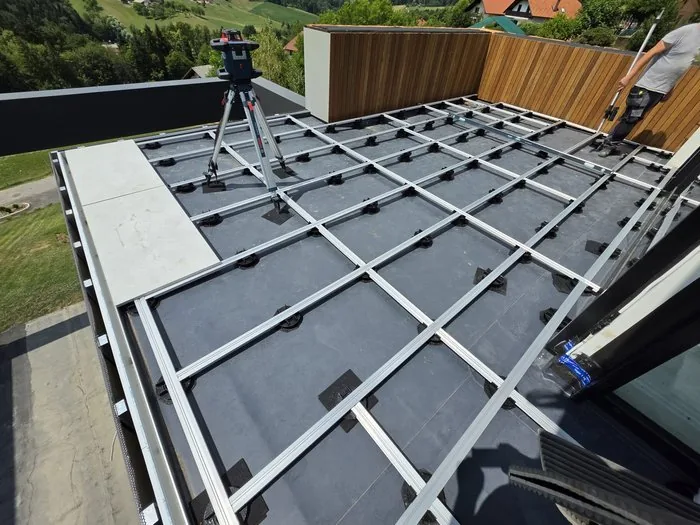
A pedestal is a column. At its shortest setting the body is squat and rigid; as you thread it taller, the effective column gets longer and the rated capacity falls. Two practical rules:
- Quote the rating at your finished height. If your terrace sits 300 mm above the slab, the HE Series is past its minimum, so use the load figure for ~300 mm — not the 2,000 kg minimum-height number.
- Keep the grid tight for tall builds. On tall podiums, place pedestals closer (e.g. 500 mm rather than 600 mm) so each carries less and the surface stays stiff.
For exact figures at a specific height, send us the finished height and we return the load table and a pedestal count.
4. How to calculate pedestals & spacing
A quick method for a raised deck or paved terrace:
- Total load = dead load (deck boards / pavers + pedestals) + live load (people, furniture, planters). A porcelain terrace is heavy; a timber deck is light.
- Per-pedestal budget = rated load at your height ÷ 2 (the safety margin). E.g. B Series at low height: 3,500 ÷ 2 ≈ 1,750 kg per pedestal to design to.
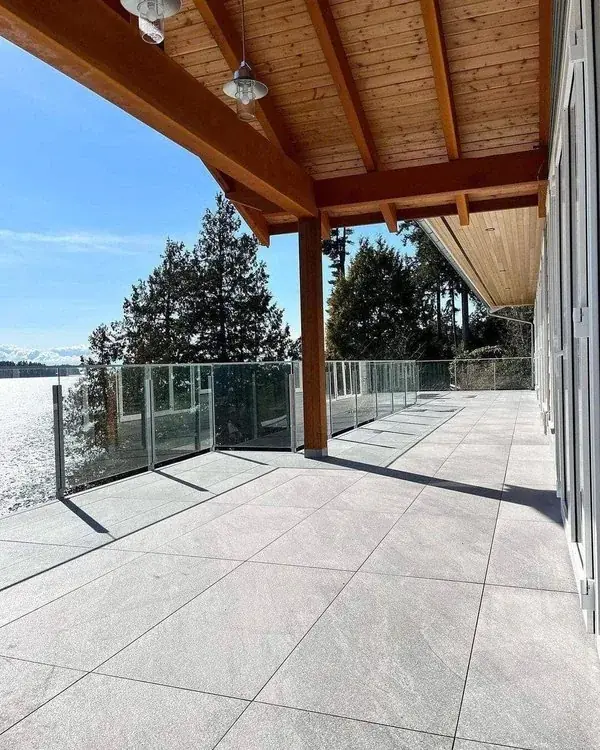
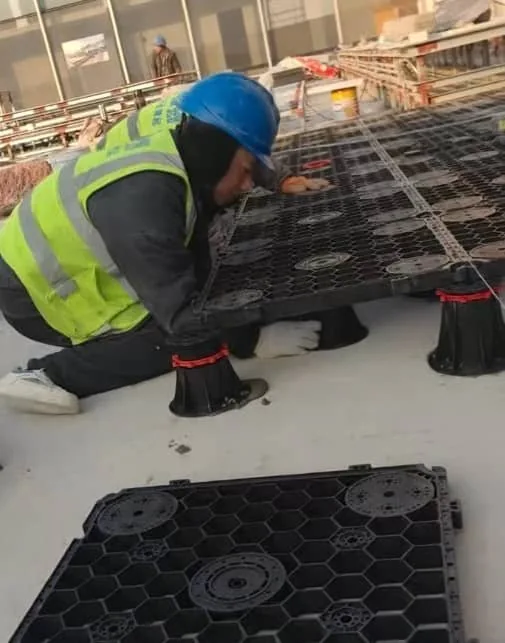
- Grid: decking joists at ~500 mm centres; pavers one pedestal under each 600×600 mm tile corner (4 per tile).
- Count: a 500–600 mm grid is roughly 3–4 pedestals per m², so a 20 m² terrace ≈ 60–80 pedestals.
For how much weight a pedestal can support in your exact build, run the numbers against the load table and confirm spacing — that is the step most DIY guides skip, and it is the one that keeps the floor from bouncing.
5. What protects the rated load
- Flat, stable base: pedestals spread load through a wide 140 mm foot; keep the slab clean and even.
- Membrane protection: on roofs, use a rubber shim or protection mat under each base so point pressure never reaches the waterproofing.
- Even distribution: a regular grid means no single pedestal is overloaded; avoid cantilevered tiles with only one or two supports.
- Edge restraint: secure perimeter boards/tiles so wind uplift can't lift them and shift loads.

6. Safety factor & standards
Published pedestal load capacity figures are the certified SGS working loads. The products are designed and tested with an engineering safety margin well above the stated number, so in the field you size to about half the rated load per pedestal. That margin covers live loads, point loads (a heavy planter in one corner), and slight unevenness in the slab.
Pedestals are for pedestrian and terrace loads only — not vehicles, forklifts or drive-on traffic. For vehicular loads, specify a dedicated structural system.
Related guides
Choosing the system: How to choose the right pedestal · Install it: Installation guide · Cost: Cost per m² · Vs fixed: Adjustable vs fixed support.
Product specs: Deck pedestals · Paver pedestals · Roof pedestals · Heavy-duty pedestals.
Frequently asked questions
What is the load capacity of an adjustable pedestal?
It is the maximum vertical load a single pedestal is rated to carry at its shortest height: B Series up to 3,500 kg, F Series up to 2,200 kg, HE Series up to 2,000 kg. Read the figure for your finished height, because capacity drops as the pedestal is extended.
Does load capacity change with height?
Yes. A pedestal carries the most when shortest; as you thread it taller the effective capacity falls. The HE Series reaches the tallest build (392 mm) but is rated 2,000 kg, while the shorter B Series is rated 3,500 kg. Check the load table at your exact finished height.
How many pedestals do I need for a deck or terrace?
Estimate total load, divide by the per-pedestal capacity at your height, add a safety margin, and lay a 500–600 mm grid. For 600×600 mm pavers put one pedestal under each tile corner (4 per tile). A typical terrace needs roughly 3–4 pedestals per m².
What safety factor do Vitaro pedestals use?
Published ratings are certified (SGS-tested) working loads; the products are designed and verified with an engineering margin above the stated figure. In practice, size to about half the rated load per pedestal so live loads and point loads stay inside the limit.
Can adjustable pedestals carry vehicle loads?
No. Pedestals are specified for pedestrian and terrace live loads on raised decks, rooftops and paved terraces — not cars, forklifts or drive-on traffic. Use a dedicated structural support system for vehicular loads.
How much weight can a deck pedestal support?
A Vitaro deck pedestal supports up to 3,500 kg (B Series) at its lowest height, down to 2,000 kg for the tall HE Series. Your real limit depends on finished height, spacing and live load — use the per-pedestal rating with a safety margin and confirm against the load table.