 VitaroUNO INDUSTRIAL
Comparison
Adjustable Pedestal vs Fixed Support: A Specifier's Comparison
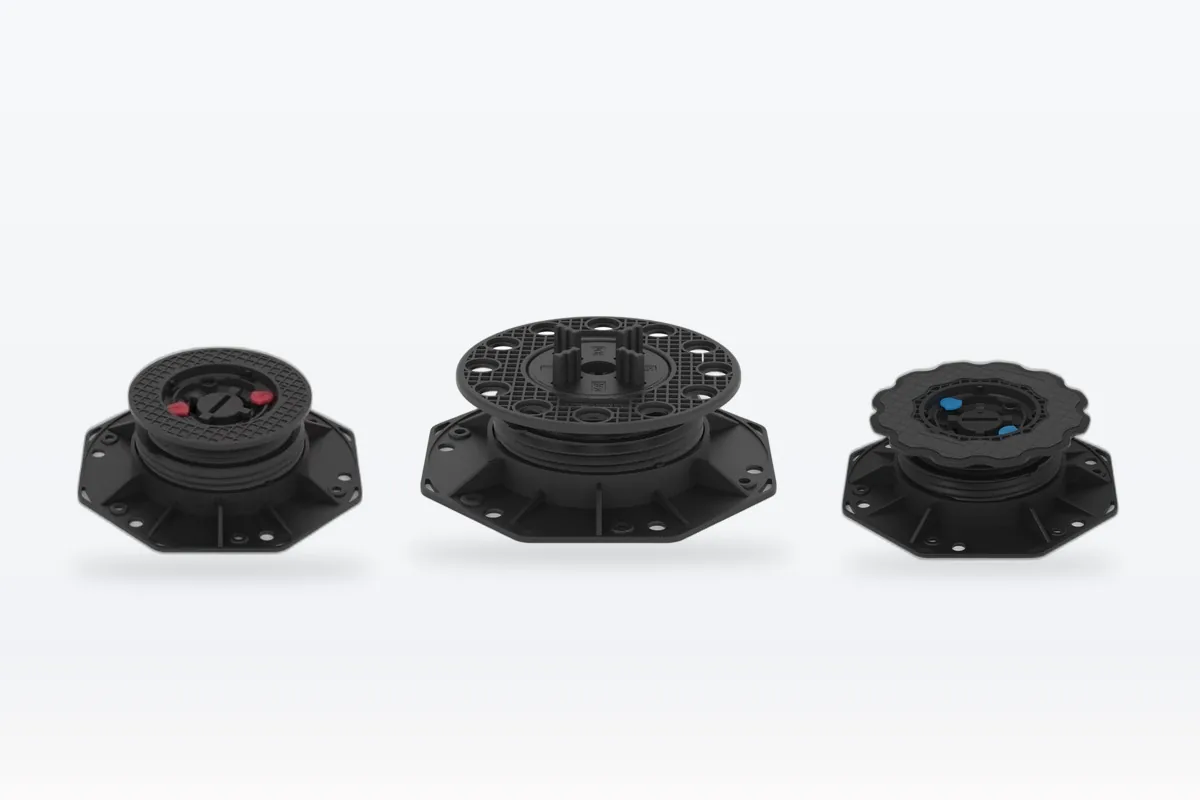
When you spec a raised floor — a rooftop terrace, a podium deck or a tiled balcony — one early decision shapes everything else: do you build on an adjustable pedestal or a fixed support? Both lift decking and paving off the slab, but they behave very differently once the substrate isn't perfectly flat. This comparison walks through leveling, slope correction, cost, install speed and membrane protection so you can choose with confidence. If you already know you want adjustable, jump to our installation guide; for budgeting, see adjustable pedestal cost per m².
1. What is a fixed-height support?
A fixed height pedestal (sometimes called a fixed support or packer pedestal) is a single, non-adjustable part — one moulded height per unit. You level the floor by adding packers, shims or a bed beneath each one. It's simple and, per part, inexpensive, which makes it attractive for flat, uniform, low-rise builds. The trade-off is exactly that rigidity: any variation in the slab has to be absorbed manually, unit by unit.
2. What is an adjustable pedestal?
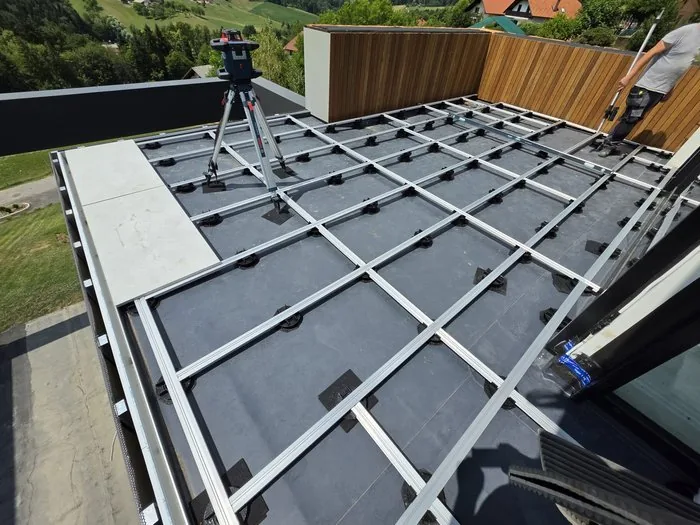
An adjustable pedestal screws up and down through a continuous height range, so one product covers many build-ups. Most have a self-leveling head that automatically compensates slab falls up to about ±5°, and many offer a slope corrector for steeper gradients. You set the finished level from above with an adjuster ring — even after the deck or pavers are laid. That "level it from the top" behaviour is the single biggest difference from a fixed support, and it's why adjustable systems dominate rooftops and terraces.
3. Head-to-head comparison
| Criterion | Fixed-height support | Adjustable pedestal |
|---|---|---|
| Leveling on uneven / sloped slabs | Poor — needs packers or shims per unit | Excellent — screw-adjust, self-leveling head |
| Height coverage | One fixed height per part | Continuous range + extenders for tall podiums |
| Slope correction | None (manual shimming) | Built-in slope corrector (±5%) / self-leveling |
| Install speed — flat slab | Fast | Fast |
| Install speed — sloped / uneven | Slow (shimming, packers) | Fast (screw to level) |
| Waterproof membrane | Wide base OK; shimming can bridge or stress it | Wide base + rubber pad, open-sided drainage |
| Rework / access | Hard — lift the floor to adjust | Easy — turn the ring, even after laying |
| Unit cost | Lower | Higher |
| Installed cost (labour + materials) | Higher (mortar / packers / time) | Lower (dry system) |
| Best for | Flat, uniform, low-rise, budget decks | Rooftops, terraces, slopes, inspectable floors |
4. When fixed supports win
- A genuinely flat, uniform slab with no fall to correct.
- Low-rise, budget-sensitive decks where the part saving matters and rework is unlikely.
- Short-term or temporary structures where inspectability isn't a priority.
Even then, confirm the slab is truly level. "Flat enough" in concrete rarely means ±1 mm across a whole terrace.
5. When adjustable pedestals win
- Rooftops and podium decks — almost always have a fall for drainage.
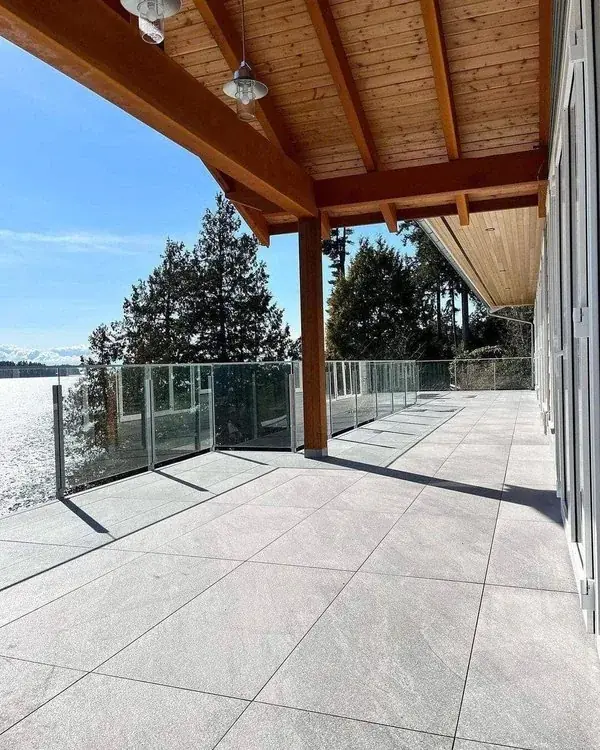
- Terraces, balconies and poolsides where you need a level finish over an uneven base.
- Any build where the waterproof membrane must stay accessible for inspection.
- Projects that may be reconfigured later — adjustable wins on lifecycle cost.
6. The common mistake: fixed on a fall
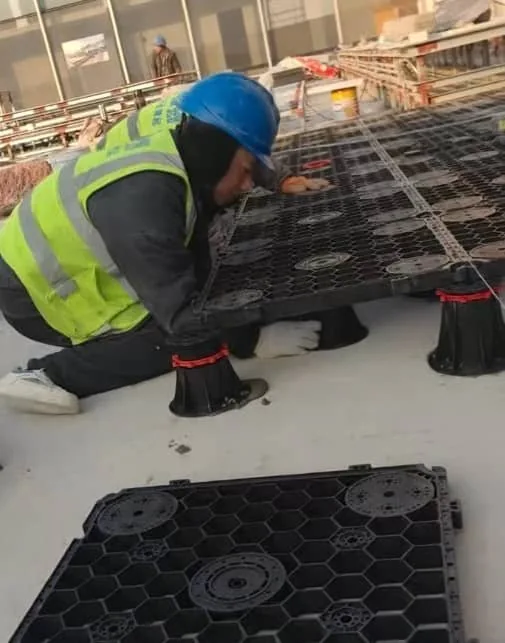
The failure mode we see most: a fixed support specified on a roof that has a 1–2% drainage fall. Crews then pack each unit by hand, the joints drift, and the "level" terrace ends up wobbly — or, worse, packers bridge the membrane and trap water against it. An adjustable pedestal over the waterproofing membrane, with a rubber pad and a self-leveling head, avoids both problems: it levels from the top and leaves the slab open for inspection. Pair it with a slope corrector on steeper falls and the floor stays true without shimming.
7. How to choose — quick checklist
- Is the slab flat and uniform? No fall, no variation → fixed can work. Anything else → adjustable.
- Must the membrane stay inspectable? Yes → adjustable (dry, liftable).
- Is rework / future access likely? Yes → adjustable (level from above).
- Count total installed cost, not just the unit price — mortar, packers and labour usually erase a fixed support's part saving.
- When in doubt on a roof or terrace, spec adjustable.
Related guides
Install it: Adjustable pedestal installation guide · Cost: Cost per m² · Rooftop build: Rooftop terrace on pedestals.
Product specs: Deck pedestals · Paver pedestals · Roof pedestals · Heavy-duty pedestals.
Frequently asked questions
What is the difference between an adjustable pedestal and a fixed support?
A fixed-height support is a single, non-adjustable part — one moulded height per unit, levelled only with packers or shims. An adjustable pedestal screws up and down through a continuous height range and often has a self-leveling head that auto-compensates slab falls. The adjustable type levels the finished floor from above; the fixed type does not.
Are fixed-height pedestals cheaper than adjustable pedestals?
Per unit, a fixed support usually costs less. But the total installed cost often flips: fixed supports need packers, mortar or shimming labour on anything but a perfect slab, and any rework means lifting the whole floor. Adjustable pedestals cost more per part but save labour and rework as a dry, screw-to-level system — see our cost-per-m2 breakdown for the full picture.
Can you use fixed supports on a sloped roof or uneven slab?
Not well. A fixed support sits at one height, so on a fall or uneven slab you must pack each one individually — slow and unreliable. On slopes, use an adjustable pedestal with a self-leveling head (±5°) or a slope-corrector option so the surface stays level without manual shimming.
Pedestal vs traditional mortar bed — which is better for a terrace?
A pedestal (dry) system beats a traditional mortar bed on most terraces: no wet trades, no curing time, full access to the membrane for inspection, and easy removal. Mortar beds add dead load, crack, and seal the slab so leaks are hard to find. Pedestals also keep the original waterproofing intact.
Do adjustable pedestals protect the waterproof membrane?
Yes. Pedestals sit on the membrane and spread load through a wide base, so they protect rather than puncture it. Add a rubber pad or protection mat under each base on sensitive roofs, and never drag pedestals across the membrane. Being open-sided, they also keep drainage falls clear.
Which is easier to rework later — fixed or adjustable?
Adjustable. You can turn the adjuster ring and re-level even after the deck or pavers are laid, and lift any tile for membrane inspection. Fixed supports are set in place (often with packers or adhesive), so correcting level or accessing the slab means lifting the floor.